In my clinical practice every visit begins with the question: “How can I best support you today?” My patients struggling with obesity often respond by expressing their frustration at the lack of movement on the scale, despite their efforts to improve their nutrition or physical activity. There is often a mismatch between how people perceive their efforts and the expectations of what results are supposed to follow. And sometimes despite our best intentions, what we thought was a healthy and better choice turns out to come with its own unexpected issues. Think: sneaky calories.
(Short on time? Click here for The Bottom Line)
What I mean by sneaky calories (aka hidden calories), are calories that are often underestimated or not even considered or counted, but still slip into your nutritional intake. Common culprits include:
- Sugar-sweetened beverages
- Cooking oils
- Condiments and sauces
- Additions to coffee (creamers, syrups, flavourings, sugary drizzles, etc)
These hidden calories clearly reflect the principle of calorie density (i.e. the calories found per weight or amount of food). Here’s an example.
Believe it or not, one of the most insidious and sneaky sources of calories is nuts. I’m not saying you can’t eat nuts anymore, but stay with me on this one because it is pretty interesting. And kind of mind blowing.
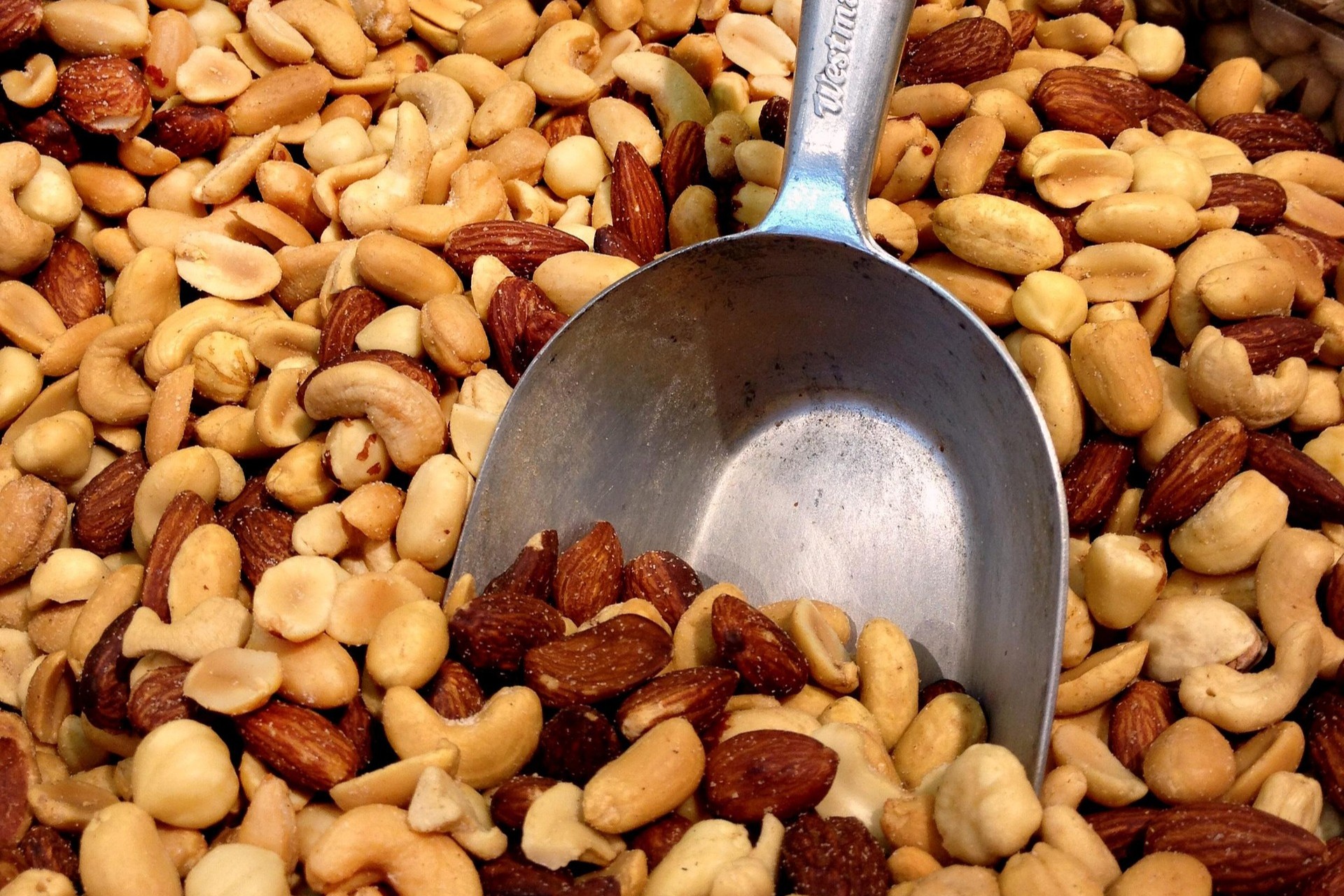
One day a client was sharing their struggle with night-time snacking, and in an effort to make healthier, better choices, they swapped out potato chips for roasted, salted, mixed nuts. They shared that since making this change, they were eating about a ¾ cup of nuts, about 5 nights per week. Despite this, the number on the scale was not budging.
[Pause for Nuance]
- Yes, nuts are definitely incredibly healthier than potato chips.
- Nuts provide healthy fats (monounsaturated and polyunsaturated) along with vitamins and minerals.
- Chips are laden with unhealthy fats (saturated) and don’t really give us any micronutrients. (And don’t forget how they contribute to weight gain and diabetes risks, as well as overeating).
[Unpause and Read On]
This person’s experience is very common and affects many folks. It is understandably frustrating. While many factors contribute to our weight and “the number on the scale”, too many calories even from healthy sources, can be a significant barrier to successful, sustainable weight management.
Let’s explore this and understand the potential problem with nuts. Here’s the nutrition label for the specific package of mixed nuts we reviewed:
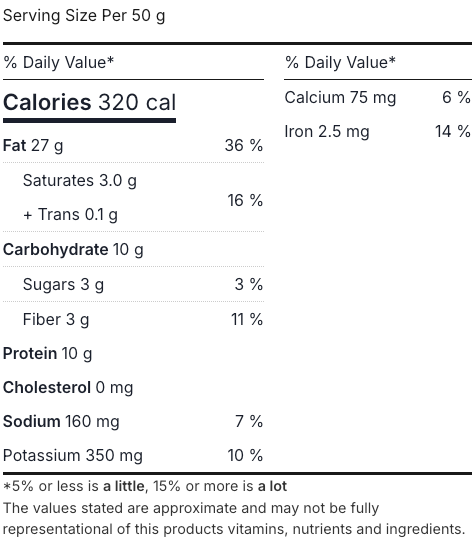
This label shows that a 50 gram serving size of these nuts contains 320 calories.
A ¾ cup of mixed nuts is equal to approximately 100 grams, or two serving sizes on this label, which contains 640 calories.
This means in addition to whatever else was eaten, about 640 calories were consumed from nuts alone everyday. Now multiply that by 5 days per week.
It’s an extra 3,200 calories consumed!
Without making any other health, nutrition, or activity changes for better or worse, that is significant.
Now, notably and thankfully, when it comes to overall still relatively healthy foods such as nuts, we do not actually retain all 3,200 of those calories. This is thanks to the concept of Calorie Absorption (more on that later). We do still retain at least ~70% of those calories and that is a substantial amount that adds up in addition to the rest of our food intake.
Over time and with enough repetition, the number on the scale can reflect this. This is not to say that it’s all “Calories In, Calories Out”… while that is part of the picture, it is certainly not the whole picture, and there is a lot more nuance here than I can convey in an emailed blog post (including after already pausing for nuance once above!). Remember, obesity is a chronic disease and our lifestyle and behaviours play a key role.
I hope you have a better understanding of sneaky or hidden calories and how they can silently and gradually add up to drive the mismatch of perceived behaviours vs expected results. Down the road we will discuss Calorie Density even more, as it is a foundational concept for successful, long term weight management, nutrition improvement, and health optimization.
If you read this and you are surprised, you are not alone. Again, you do not need to cut nuts out of your life. I would invite you to consider adjusting your daily dose portion to be closer to a tablespoon or an ounce, rather than a ¾ cup or a bunch of mindless handfuls.
Remember, even when we set out to make health changes with the best intentions, it is based on our knowledge at the time of the decision and on whatever we know and have learned up to that point. There is nothing wrong with that.
Reading this hopefully goes to show that updating our knowledge and associated beliefs, about what is healthy and what is not, is okay. It can be uncomfortable, annoying, and even disheartening, I get that. But it’s okay and normal. This is how we learn and grow.
The next time you reach for a handful of nuts, pause and reflect on your newly equipped knowledge. Eat and enjoy nuts in mindful portions and skip the excess calories!
As always, remember to chase progress, not perfection.
I believe in you,
Dr. Khimji
The Bottom Line
Sneaky calories are a critical concept to understand when it comes to weight management and optimal nutrition. Paired with the common mismatch between our perceived efforts to make healthier lifestyle changes and the expectation of results that often comes with it, it is a dangerous combination. Common sources of hidden calories are sugar-sweetened beverages, cooking oils, condiments/sauces, and coffee syrups and flavour drizzles. Nuts are also a surprisingly sneaky calorie source: 100 grams has ~600 calories!! But nuts are healthy too, because of their mono and poly unsaturated fats and complexity which changes how we absorb their calories. To find the balance, consider reducing your portion/intake to 1-2 tablespoons of nuts per day.