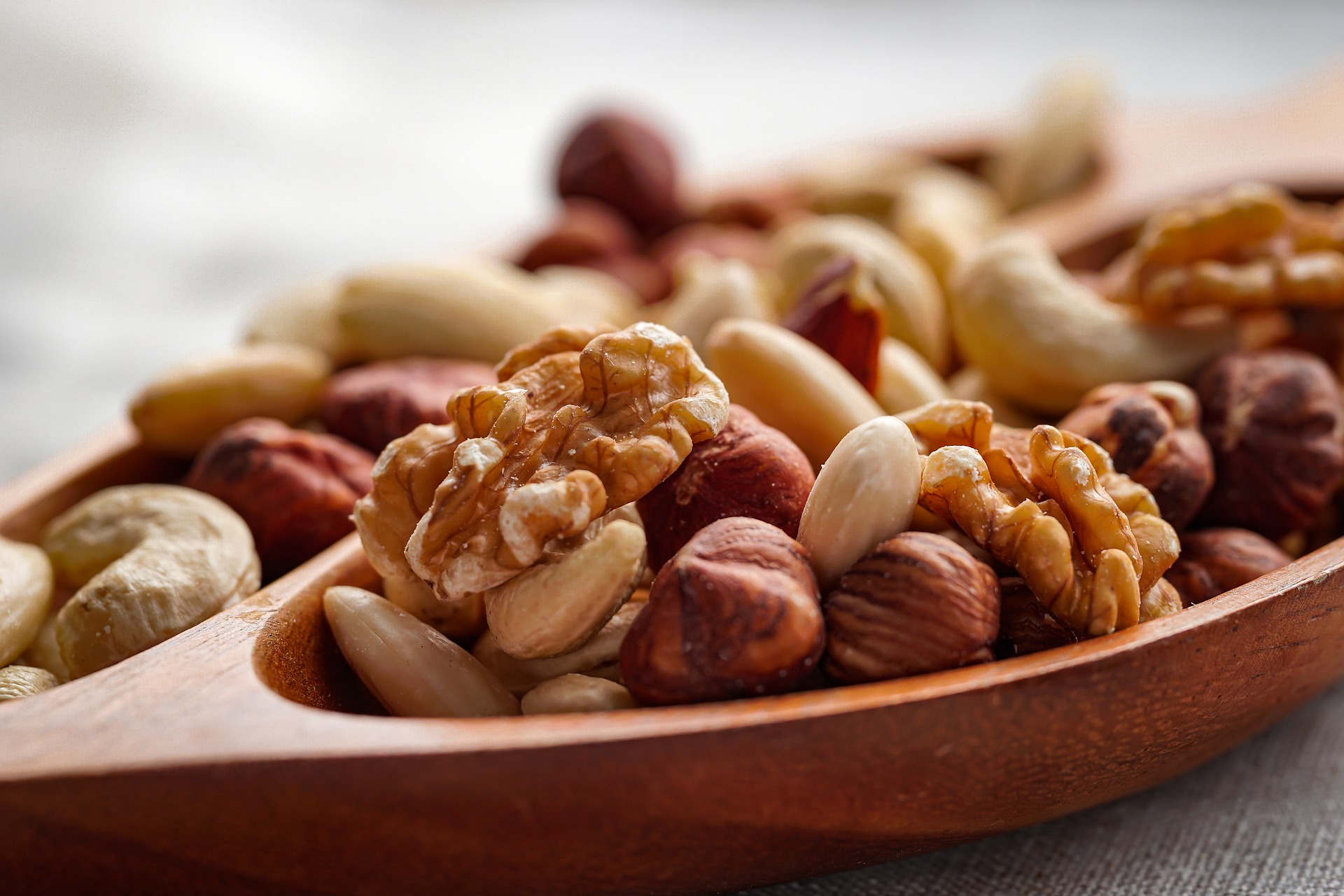
At some point, many of us have swapped potato chips for nuts and felt proud of the choice—and to be fair, it is a healthier one.
Nuts provide healthy unsaturated fats, they’re whole and minimally processed, and they’re featured in many health-promoting eating patterns.
Lifestyle medicine encourages a whole-food, plant-based (WFPB) eating pattern, and the Mediterranean diet—often recommended for people with heart disease or at risk for it—is also known to support long-term health. Both include nuts!
But here’s where things get tricky: the dose matters. A lot.
Let’s take almonds as an example.
A 1-ounce serving—about 23 raw almonds—packs 163 calories. And that’s just plain almonds. Roasted, salted, or flavored versions bring extra calories, sodium, and sometimes added oils.
Now think about how people typically eat nuts:
Handfuls from a jar or snack bag. No measuring. No counting. Just… munching.
In the name of “nuts are healthy,” it’s easy to polish off two or three ounces in minutes—without even realizing it. That’s nearly 500 calories, often on top of meals, not instead of them.
So yes, nuts are healthy—but they’re also calorie-dense. That’s the part that gets overlooked.
If you’re managing your weight or trying to create a calorie deficit, portion control is key. A good starting point? Try limiting to 5–10 individual nuts per day, eaten mindfully, rather than by the handful.
More isn’t always better—especially when it comes to high-calorie foods, even the healthy ones.
Did this surprise you?