Last week we learned all about the Zimbabwe Hand Jive. This is a great reference guide you can use for smarter portions and healthier plates when it comes to your nutrition. It is personalized for your size and ready to go wherever you are, because you use your own hands as your guide! As promised, this week we will explore specific foods which fit into each category to make it easier for you to keep applying the hand jive in your day to day living.
(Short on time? Click here for The Bottom Line)
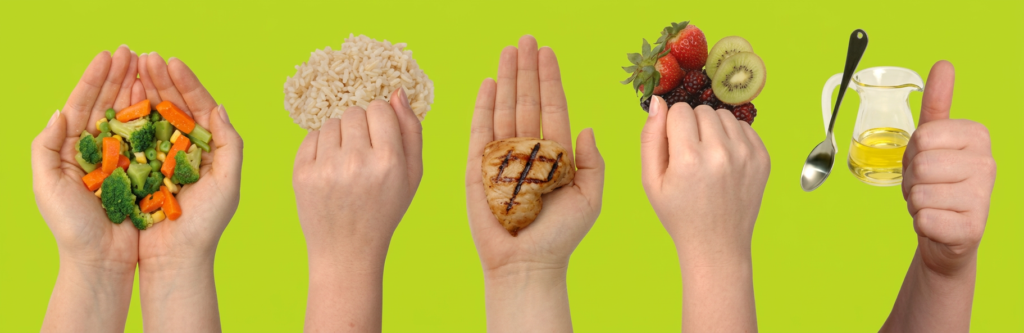
For ease of reference and so you do not have to flip back and forth between pages, here is the image of the hand portions:
https://www.umassmed.edu/dcoe/diabetes-education/nutrition/zimbabwe-hand-jive/
We’ll go through each one again, but this time focus more on examples of foods that fit into each category.
-
Non-Starchy Vegetables
-
Measure using two open, cupped hands. Food Examples:
- Leafy Greens (spinach, kale, lettuce)
- Broccoli
- Cauliflower
- Brussels sprouts
- Cabbage
- Green Beans
- Snow Peas
- Asparagus
- Bell Peppers
- Cucumber
- Celery
- Zucchini
- Eggplant
- Mushrooms
- Tomatoes
- Bean Sprouts
-
Measure using two open, cupped hands. Food Examples:
-
Grains and Starches (includes other vegetables too)
-
Measure using one closed fist. Food Examples:
- Rice (brown or white)
- Oatmeal
- Quinoa
- Bread (Whole-Grain, Sourdough, Rye)
- Pasta
- Barley
- Couscous
- Potatoes
- Sweet Potatoes
- Yams
- Plantain
- Butternut Squash
- Beets
- Parsnips
- Corn
- Green Peas
- PS. If you do eat cereal, whether rarely or often, one closed fist is the portion size to aim for!
-
Measure using one closed fist. Food Examples:
-
Protein
-
Measure using one open palm and the thickness of your pinky finger. Food Examples:
- Tofu
- Tempeh
- Lentils*
- Chickpeas*
- Beans (Black, Kidney, etc.)*
- Edamame
- Seitan
- Chicken
- Turkey
- Lean Meat Cuts (Beef, Pork)
- Fish / Shellfish
- Eggs
- Greek Yogurt
- Cottage Cheese
- Both plant and animal sources (as listed) are options you can choose from. Keep in mind that the starred foods on this list provide you with both protein and healthy carbohydrates!
-
Measure using one open palm and the thickness of your pinky finger. Food Examples:
-
Fruit (fresh, frozen, or unsweetened canned are all fine)
-
Measure using one closed fist. Food Examples:
- Apple
- Pear
- Banana
- Orange
- Mandarins
- Berries (Blueberries, Blackberries, Strawberries, Raspberries, etc.)
- Grapes
- Peach
- Plum
- Kiwi
- Mango
- Pineapple
- Papaya
- Watermelon
- Canteloupe
-
Measure using one closed fist. Food Examples:
-
Fats (remember there are different types of fats)
-
Measure using one thumb’s worth (approx 1 tbsp). Food Examples:
- Avocado
- Nuts (Almonds, Walnuts, Cashews, etc.)
- Seeds (Chia, Flax, Pumpkin, etc.)
- Plant Oils (Olive, Avocado, etc.)
- Nut Butters (Peanut, Almond, etc.)
- Tahini
- Olives
- Animal Fats (Butter, Ghee, Lard, etc.)
- Cheese
- Cream
- Mayonnaise
- Margarine
- Dressings & Dips
-
Measure using one thumb’s worth (approx 1 tbsp). Food Examples:
Although these lists are pretty long, they are not exhaustive whatsoever. There are lots more food choices in each category and remember, the Zimbabwe Hand Jive is primarily a portion guide and estimate. There is more nuance when it comes to micronutrients and macronutrients and calories and more. We have discussed some of that in the past and we will cover more in the future!
Eating balanced portions matters for chronic disease management and health optimization, whether for longevity, mental wellbeing, or reducing risk of heart attack or stroke. Knowing what foods go into the various portions and categories is a next critical step in applying this knowledge.
Bonus tips as promised. First, variety and diversity always help. Really keep that in the back of your mind when putting together fruits and vegetables. That is a simple place to start with more variety, colour, and a better mix. Second, another method regarding the non-starchy vegetables is to fill half your plate with them. It is about the same or more than two cupped handfuls and again, the more of this category we consume the better. Bonus within the bonus tips, eat this part of your meal first! Finally, third, pair this knowledge with awareness of your hunger and fullness signals for the ultimate nutrition and health benefit when it comes to food.
Thanks to tools like the Canada Food Guide and Zimbabwe Hand Jive, portion control is quite literally in your hands. Give it a try and diversify your food choices using the list above. You got this!
As always, chase progress, not perfection.
I believe in you,
Dr. Khimji
This Week’s Challenge
The next time you do your grocery shopping, be adventurous and try a vegetable you never have, or that you may not have had in a long time. You might just have a different experience with it this time around!
The Bottom Line
Building on last week’s topic, the Zimbabwe Hand Jive, this post focuses on tangible, real examples of foods which belong in each category that are paired with the hand positions and guides. You can simply scroll up to screenshot the food lists and add them to a note for your next grocery shop. Non-starchy vegetables should be the largest volume and broadest diversity/variety on your plate at each meal, with a goal of eating them first. Grains and starches, as well as fruits, are measured with a closed fist and this can help you eat foods you love without feeling that you need to cut them out entirely. Portions and moderation matter! Protein is based on your palm and the thickness of your little finger, with plenty of plant based options available these days. Fats can be tricky, remember there are healthy and less healthy types of fat, but either way portions should be the smallest overall, no bigger than your thumb. Calories easily sneak in here. Pair this knowledge with awareness of your hunger and fullness cues for optimal nutrition related health benefits!