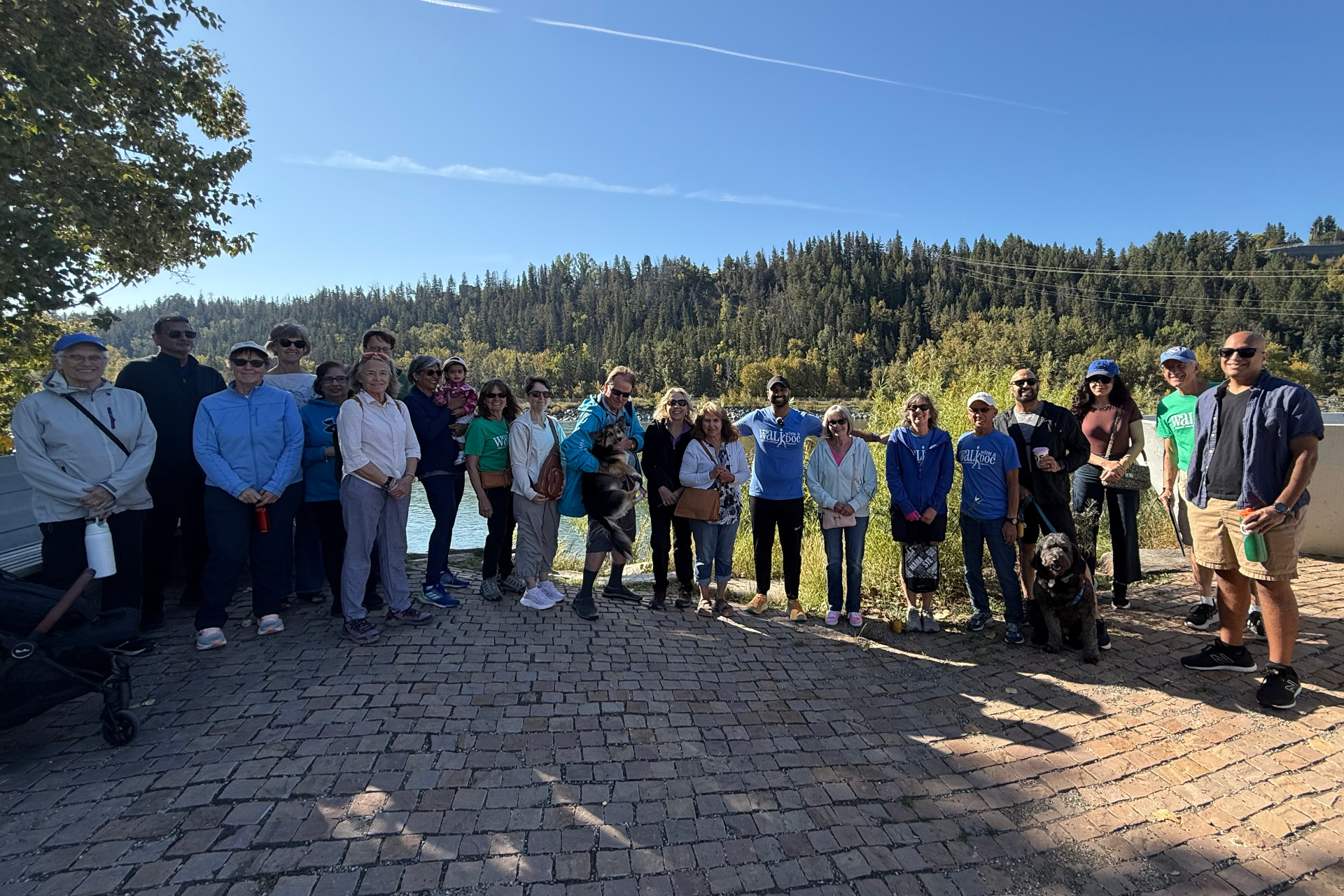
Dr. Khimji hosted Calgary’s 18th Walk With A Doc this past weekend, you can watch the full health talk on Micro-mindfulness here:
What do you think of when you hear the word mindfulness? Is it a person sitting cross-legged on the floor with their eyes closed? Perhaps a warmly lit room with relaxing instrumental music? Or a person taking a deep breath in? Or someone meditating for an hour uninterrupted? Although each of these do paint a classic picture of mindfulness, they are often idealized and not necessarily practical. Especially for our busy pace of life in North America. Enter micro-mindfulness: a way to practice mindfulness, without feeling like you need to jump hurdles to enter the game.
(Short on time? Click here for The Bottom Line)
First, what is mindfulness? Mindfulness is the practice of being present in any given moment. It is when you attempt to bring intentional focus to the present moment. It involves a conscious level of awareness. And a critical element is doing this without judgement.
It is easy to get caught up in the idea that you need to schedule time in your calendar or attend some wellness event in order to practice mindfulness. Instead, you can try micro-mindfulness. This allows you to practice mindfulness in bite-sized (micro) moments as short as 10-90 seconds, which helps you sprinkle pockets of intentional focus throughout your day.
But why does this even matter? Healthy stress management is a key pillar of Lifestyle Medicine and is much better managed with mindfulness. Even though acute stressors may be tackled with mindfulness (albeit more challenging), it’s the chronic stress that I hope to help you most with. Chronic stress is that low-level, underlying stress that never really goes away, resulting in your nervous system staying in a constant “fight or flight” mode. This increases your risk of chronic diseases and also makes chronic diseases themselves worse. Specifically, this stress raises your blood pressure and resting heart rate, leads to more insulin resistance and higher blood sugar levels, disrupts digestion, sleep, and more.
Mindfulness is an excellent strategy to disrupt that constant state of chronic stress. But how does it actually work?
A key physiological and anatomical element is at play: your Vagus Nerve. Ever heard of this? Your vagus nerve is how the non fight or flight part of your nervous system works (the “rest and digest” part). For instance, taking an intentional breath or bringing intentional awareness to sensations around you, can stimulate your vagus nerve, instantly bringing you health benefits in that very moment. Right away you may notice a lower heart rate, less amplification of fear signals from the brain, and improved executive function (your ability to respond calmly instead of react impulsively).
Since it is possible to see immediate and delayed health benefits when practicing mindfulness, I would sincerely advocate for you to give it a try. Remember, you don’t need a pin-drop silent room or special equipment to get started. Try micro-mindfulness for a practical, more simple approach for actually doing this more often.
Here’s your action plan for micro-mindfulness:
-
Try Box Breathing
-
4 steps:
- Breathe in (nose) for 4 seconds
- Hold your breath for 4 seconds
- Breathe out (mouth) for 4 seconds
- Hold empty for 4 seconds
- Repeat these steps for at least 3 cycles (total 60 seconds)
-
4 steps:
-
Try 5-4-3-2-1 Grounding
-
5 things to mentally identify:
- 5 things you see
- 4 things you feel (physically)
- 3 things you hear
- 2 things you smell
- 1 thing you taste
-
5 things to mentally identify:
-
Try Sky Mind
- Look up at the sky and widen your visual field including using your peripheral vision and take in the vast and broad sky (or landscape/surroundings) around you.
- Tip: works best if you are outdoors, but works well looking out of a window, or at the very least, glancing away from whatever you are focused on, especially if that is a digital screen.
Each of these strategies can be done whenever and wherever you are. They work by disrupting the mind and thoughts and helping your brain focus on the immediate present. Not to mention all those other physical and physiological benefits to your body we discussed earlier.
I hope these help you live a life of less (or at least better managed) stress, and bring you more happiness and health. Keep your eye out for a future post where we will go over a trick about how to make micro-mindfulness (and other healthy habits) actually stick!
As always, chase progress, not perfection.
I believe in you,
Dr. Khimji
This Week’s Challenge
At least 2 nights this week, phone a friend and talk to someone instead of texting them.
The Bottom Line
If you deal with any kind of stress, I am sure you are aware of the importance of stress management. Advice around mindfulness and meditation can help, but if life is busy and scheduling or the calendar are full, then it’s probably not reasonable to sit quietly on a cushion for 30 minutes every morning and meditate. Good news: you just need 60 seconds. Welcome to micro-mindfulness. Mindfulness itself means bringing intentional, non-judgemental awareness to the present moment. This is important not only for chronic stress management but also for chronic disease prevention and reversal, whether you want to lose weight, have a better A1c, or better control blood pressure. It works primarily by stimulating your vagus nerve, which helps your nervous system be more in the “rest and digest” mode and less in the “fight or flight” mode. Micro-mindfulness gives you an opportunity to get these benefits both immediately in any moment and more long term as well. You can try box breathing, 5-4-3-2-1 grounding, and ‘sky mind’ to name a few. Either way, they all help you focus on the present and lead to happier, healthier living!