Cardiovascular Disease (CVD) continues to be the leading cause of death around the world. It often develops on a foundation of chronic diseases that impact your metabolism, such as Type 2 Diabetes (High Blood Sugar) or Hyperlipidemia (High Cholesterol). This post looks deeper into Hypertension (High Blood Pressure), yet another chronic disease “silent killer” that increases our risk for heart attacks, strokes, and shorter lifespan. The good news? Around 80% of CVD is preventable through your lifestyle, choices, and with early detection.
(Short on time? Click here for The Bottom Line)
When we first discussed high blood pressure (BP) a few months ago, we learned the basics: what BP is, how it works, what the numbers mean, and about risk factors and complications. Remember, it is a very common condition and often does not present with symptoms for many years. This is why screening, seeing your Family Doctor regularly, and having your BP checked when appropriate is so important.
But when should you worry? When we screen for hypertension (i.e. check your BP) during your clinic visit, we are looking for a target less than or equal to 130/80. If you land below those numbers, you are good. If you score above those cut-offs, we then arrange an out-of-office BP check to confirm the results, either as a 24-hour test where you wear a portable device, or as a series of manual BP measurements you take at home. Then we review the data and assess whether your blood pressure is normal or elevated.
If you go the route of getting your own device and checking your BP at home, it’s important to know how to do this properly. There are more factors that impact the accuracy of the measurement than we may realize. The following guidance, adapted directly from Hypertension Canada is a useful information summary on all the small factors that add up to influence your BP check:
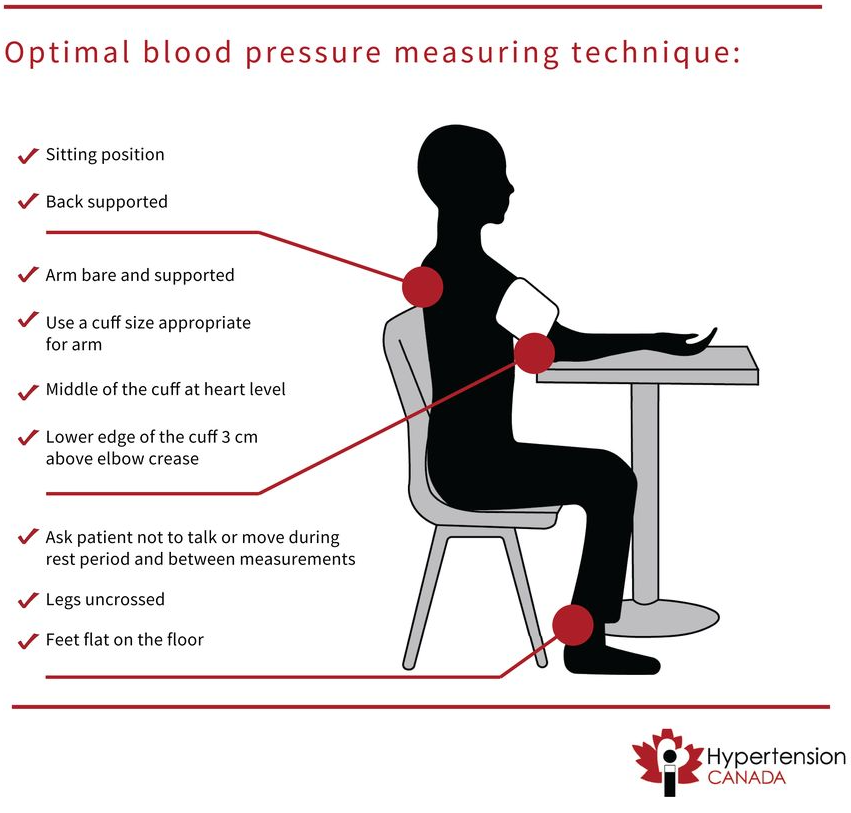
A few other notes to pay attention to:
- Sit quietly for 5 minutes with the BP cuff on before starting the measurement
- Ideally, do not smoke, consume caffeine, or use the bathroom within 30min before checking BP
- Take 2-3 readings, with 1 minute in between each
Whether you want to prevent getting high blood pressure, or do everything in your power to manage it better, here are your actionable strategies for success:
-
Nutrition
- Prioritize and consume plenty of vegetables, fruits, healthy whole grains, legumes, nuts, as well as low-fat milk products, and lean meats. (aka the DASH Diet: Dietary Approaches to Stop Hypertension).
- Limit sodium to 1500-2300mg maximum per day. Buy products labelled with </= 5% daily value sodium.
-
Movement
- Get active and stay active. Regular, consistent activity, especially walking (bonus if its outdoors and in nature), regulates BP well.
- Achieve and maintain a healthy weight to improve heart health and blood pressure.
-
Stress
- Eliminate stressors where possible and do what you can to stay in charge of your life.
- When you cannot get rid of the stressors, practice healthy coping strategies and focus on what is in your control.
-
Substances
- Stop smoking. One of the single best things you can do for BP, heart, and health. We are here to support.
- Reduce your alcohol consumption. <2 drinks per week now, not <2 drinks per day, as the target maximum. Eliminate it if you can.
Notice the overlap almost exactly with the pillars of Lifestyle Medicine (quality sleep and social connection help BP too!).
If you are diagnosed with blood pressure and your numbers are high and/or you have risks for CVD, then it’s important to use medications in addition to lifestyle changes. It does not have to be one or the other.
NOTE: If you have specific questions about your BP, heart health, or other related concerns, please discuss these with your family physician or professional healthcare provider.
The Bottom Line
CVD is a leading cause of death worldwide and your risk goes up when you have chronic diseases such as Hypertension (High Blood Pressure). Good news: lifestyle, choices, and early screening can prevent and manage 80% of these conditions. Get your Blood Pressure (BP) checked regularly, eat whole plant foods, limit daily sodium intake, get and stay active (especially walking), and cut out substances. These behaviours help your heart health, BP, and improve your quality of life and boost metabolism and longevity.