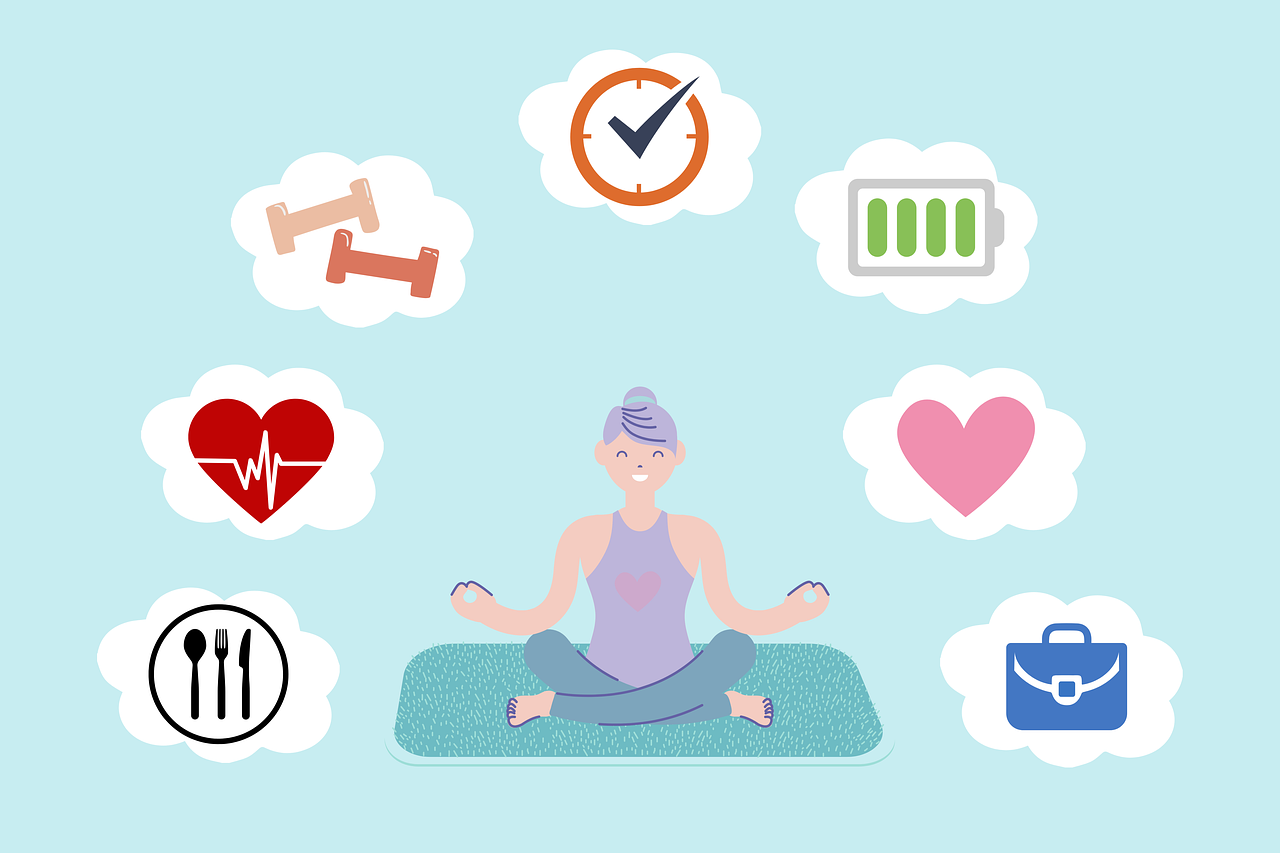
Stress management is one of the six pillars of Lifestyle Medicine.
Understanding mental health and how it works, makes it easier to practice stress reduction techniques effectively and consistently.
Mental health is intrinsically associated with our emotional and psychological well-being, and intentionally making time to care for our mind and emotions helps us build resilience and better navigate our lives.
The thoughts we have influence the way we feel, which in turn drive many of our habits and behaviours. The idea that our thoughts, feelings, and behaviours all affect and are affected by each other, is the foundational approach of Cognitive Behavioural Therapy (CBT).
Human brains are hardwired to focus more on negative experiences than positive. This is not a bad thing, it simply comes from brain development and evolution.
Many of us are also experts in negative self-talk. We are hard on ourselves, pressure ourselves, beat ourselves up, and may feel like what we do falls short of expectation or that who we are is not good enough.
Practices in gratitude, mindfulness, and self-kindness are examples of ways in which we can improve our mental health.
A positive mindset helps us make healthy choices, which leads to lasting success with any goal– from weight loss to flossing to anything else.
So where can we start?
Practice awareness. Be mindful of the way you talk to yourself. Catch the negative self talk.
If you feel comfortable with that, consider re-framing it with more positive language and see if that helps.
Note: it is always okay to seek professional help for mental health whenever needed. If you are in a crisis or emergency, please seek immediate medical attention.