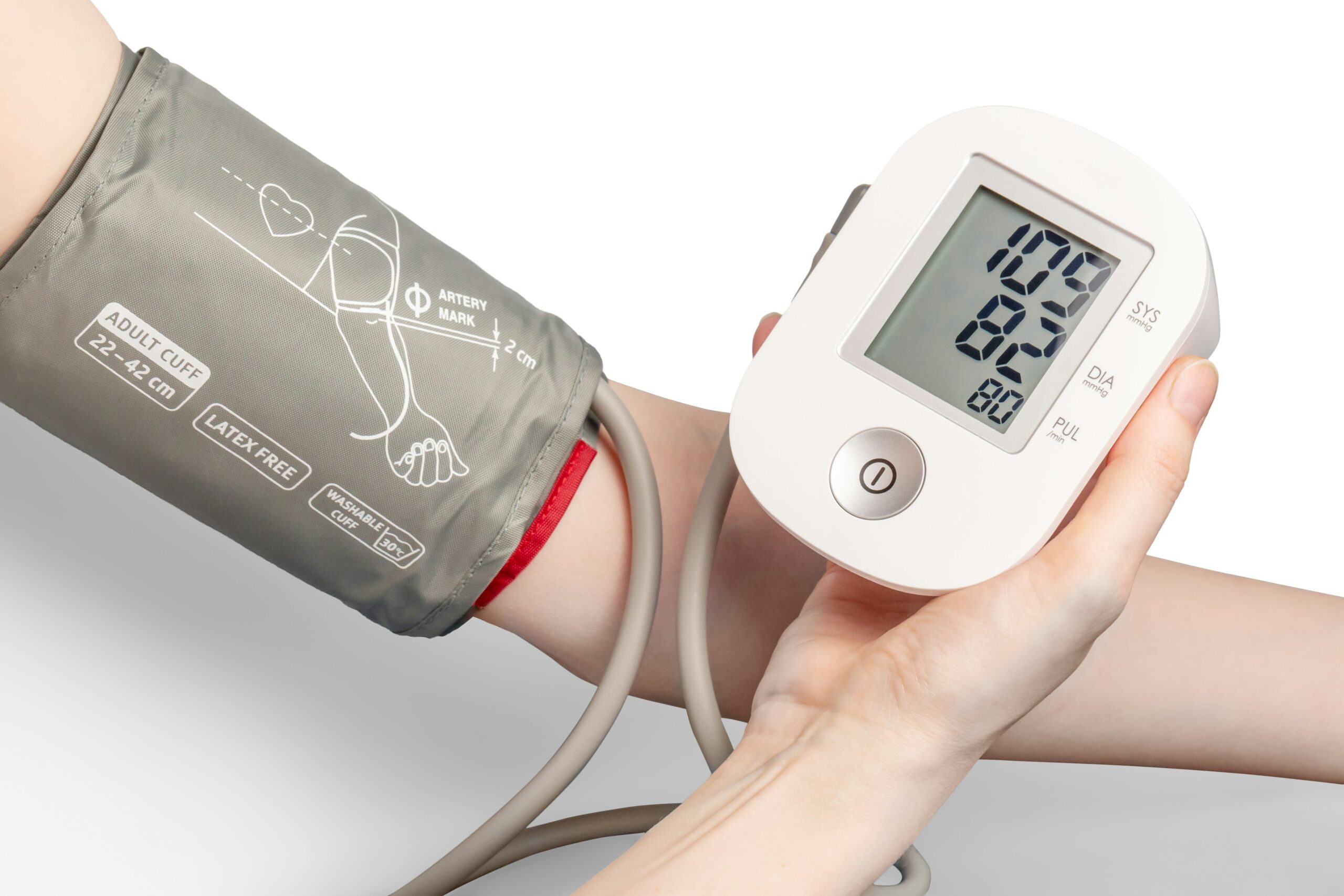
Hypertension, often referred to as high blood pressure, is a very common medical condition that affects 1 in 4 Canadians. It is a chronic disease, meaning it tends to persist for many years, if not lifelong. Although it doesn’t usually present with any symptoms initially, hypertension leads to some major health problems if it is not managed.
But what is blood pressure? ‘Blood pressure’ refers to how strongly your heart pumps blood around the body. Pumping and pushing blood through your vessels creates blood flow, which brings nutrients and oxygen to your cells and organs.
Adding high or low to the term, refers to the amount of pressure. Too much or too little pressure leads to various health conditions. We are going to focus on the too much (high) blood pressure.
Blood pressure is a vital sign that gives us quick, key information about your heart and artery health, which is why you see it measured in nearly all healthcare settings, from clinics to pharmacies to emergency departments.
Your blood pressure reading consists of two numbers.
The top number is known as “systolic” which is when your heart squeezes blood to pump it.
The bottom number is “diastolic” which is when your heart relaxes as it refills with blood.
The higher these numbers are, and the longer they stay elevated, the more likely you are to have certain health problems, such as heart attacks, strokes, kidney diseases, and more… In fact, high blood pressure is a known “silent killer” because we can be affected for a long time (even decades) before we realize there is significant injury to our blood vessels. So it’s important to really understand what this is and how we can prevent, manage, treat, and reverse it!
For the general population, a good target blood pressure is less than 140 over less than 90. Depending on risk factors, other medical conditions, etc, that target can change.
There are lots of things that affect our blood pressure.
Some risk factors we cannot change: age, genetics, family history.
But some things we can change: smoking, alcohol, unhealthy eating, stress management, lack of physical activity and exercise, obesity, type 2 diabetes, sleep apnea, and other conditions and lifestyle factors.
The better we manage these aspects of our health, the better our blood pressure becomes. And if that happens, your risk of chronic diseases and life ending problems like heart attacks and strokes also drops.
We’ll learn lots more about high blood pressure down the road. For now, focus on building healthy habits and practicing positive health behaviours around those aspects and risk factors that you can control, so that you can do your best to avoid or better manage blood pressure.
Note: If you have specific questions about your health or medical management of high blood pressure, please discuss these with your healthcare provider.